Table of Contents
ToggleKey Takeaways
Not every elevated platform should be connected, even if it seems convenient or physically close to another structure.
OSHA platform requirements, access needs, and fall protection rules serve as the first filter for deciding whether to connect or separate platforms.
Connecting platforms works best for routine, high-traffic movement; keeping platforms separate works best for task-specific, short-term, or high-risk areas. choosing digital platforms for businesses is essential for optimizing efficiency and enhancing interaction. By evaluating the specific needs and goals, companies can better align their digital strategy with their target audience. This tailored approach not only improves user experience but also drives growth in an increasingly competitive market.
Connected elevated platforms can improve efficiency but often increase structural, inspection, and rescue complexity.
Safety, not convenience, must drive decisions about crossover bridges, catwalks, and integrated work platform networks.
Quick Answer: How to Decide If Platforms Should Be Connected
Connect when workers move often between areas and you can maintain full OSHA compliance. Keep separate when access is infrequent, hazardous, or hard to protect. This simple rule covers most industrial scenarios.
Use these quick yes/no checks before deciding:
Do at least 5 employees cross between these platforms daily?
Can you provide continuous guardrails and fall protection if you connect them?
Is the route free of dangerous equipment, open hatches, or chemical lines below?
Do both platforms meet current OSHA load and surface requirements?
Has an engineer reviewed the proposed connection?
Any connection between elevated platforms becomes its own walking-working surface under OSHA 29 CFR 1910, triggering fall protection and inspection duties.
If more than two answers are “no,” keep platforms separate and use stairs or ladders that meet OSHA standards.
What Counts as a Platform, and Why Connection Choices Matter
According to OSHA, a platform is defined as a walking-working surface that is elevated above the surrounding area, which includes various applications such as industrial assembly lines and maintenance platforms.
There are two main types of platforms: rigid platforms, which are typically made of wood or metal frames, and parallel platforms, which have a folding frame and removable top.
Rigid platforms can be constructed using various materials, including 2×4 lumber, which is common due to its availability and cost-effectiveness, or tubular steel for greater durability.
Platforms are often used in various applications, including industrial assembly lines, maintenance and service areas, mezzanines, catwalks, and access platforms.
Once platforms are connected, OSHA treats the combined surface as a single walking-working system that must support expected loads and meet surface requirements (clean, dry, free of trip hazards).
Connection decisions affect evacuation routes, fall protection design, rescue plans, and how maintenance crews move through the facility.
Mobile work platforms and lifts follow different rules and usually should not be permanently connected to fixed structures.
OSHA Platform Requirements That Shape Connection Decisions
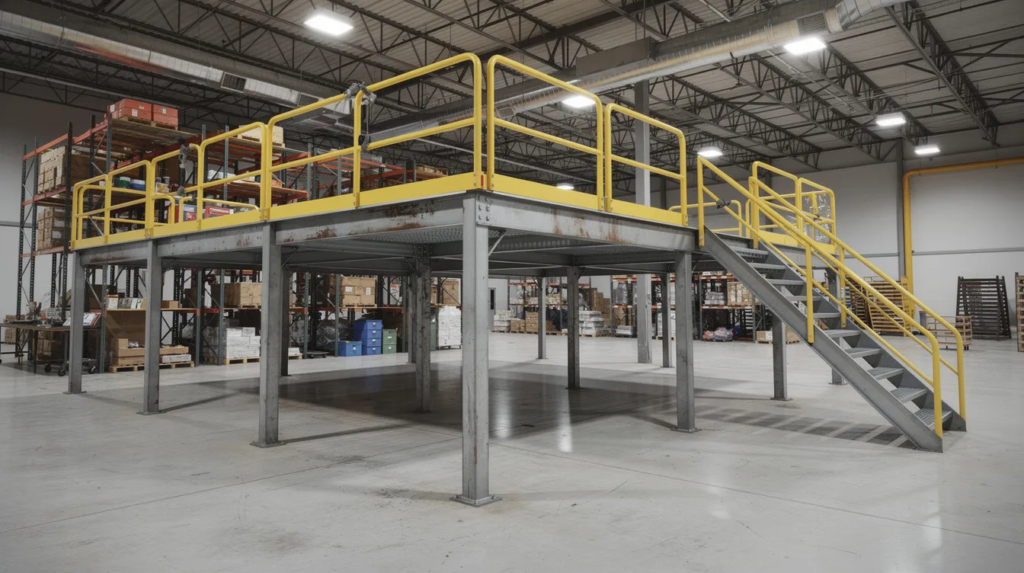
OSHA platform requirements from the 2016 Final Rule often decide whether a connection is possible or practical. These standards apply to any elevated platform system you create or modify.
OSHA requires that any platform with an unprotected side or edge that is 4 feet or more above a lower level must have fall protection, which can include guardrail systems, safety net systems, or personal fall arrest systems.
OSHA mandates that guardrails on platforms must be at least 42 inches high and capable of withstanding a force of at least 200 pounds applied in any direction.
Platforms must be able to support the required weight, with a minimum of 500 pounds for crossover or access platforms, and should be kept clean and dry to prevent hazards.
When accessing platforms, OSHA requires that standard stairs be used if the platform requires routine travel, with specific requirements for tread depth and riser height to ensure safety.
OSHA requires that any platform with routine access must have standard stairs or ladders; stairs must have a rise of 9.5 inches or less and a minimum tread depth of 9.5 inches.
Platform access points (stairs, ladders, self-closing gates) must follow OSHA 1910.23 and 1910.25, and any new connection cannot block or compromise egress routes.
When to Connect Platforms: Common Use Cases and Benefits
This section covers practical scenarios where connecting platforms improves safety and efficiency. Operational efficiency is prioritized when seamless, automated workflows and real-time data syncs are needed organization-wide.
Linking two mezzanines over a production floor eliminates repeated stair climbs for workers who move between lines every shift.
Adding a catwalk between adjacent elevated work platforms near mixing tanks improves oversight and reduces exposure to hazards below.
Creating a continuous walkway above a conveyor line installed in 2020 allows inspection and maintenance without stepping over moving equipment.
Connected platforms reduce the need for workers to use ladders multiple times per shift, lowering fall risk when proper guardrails and toeboards are installed.
For routine inspections, connecting platforms can shorten routes and encourage compliance with daily walk-throughs.
Connecting platforms can centralize fall protection (single guardrail system, fewer personal fall arrest transitions), but only if the design stays within OSHA’s fall protection rules.
Advantages of Connected Elevated Platforms
Integrating platforms creates a unified ecosystem where different tools communicate and share data seamlessly. The same logic applies to physical platform networks. Ensuring data quality impact on platform efficiency is crucial for maximizing the benefits of this integration. Reliable data fosters improved decision-making and operational agility within the ecosystem. As platforms rely on accurate data exchange, the importance of maintaining high standards in data management cannot be overstated.
Improved workflow: A connected work platform network lets operators cross between two or three machines without climbing down to floor level each time.
Better line-of-sight: Supervisors on a connected mezzanine can oversee multiple lines from one elevated vantage point.
Reduced ladder dependence: OSHA prefers fixed stairs and guarded platforms over frequent ladder use for routine access.
Simplified training: One continuous guarded route is easier to explain in orientation and emergency drills than multiple disjointed platforms.
Real-time data eliminates data silos, allowing seamless updates across all departments when monitoring connected systems.
Integrating platforms increases productivity by reducing manual data entry and minimizing human error.
Risks and Trade-Offs of Connecting Platforms
Every new crossover or bridge adds complexity and potential failure points. Higher initial investment is often required for integrating platforms to purchase and configure them.
Long connected runs can concentrate foot traffic, which may exceed original design loads if not re-engineered.
Guardrail gaps at access openings (like ladderways) must be closed with self-closing safety gates, and each new junction is another place fall protection can fail.
Rescue planning becomes harder on large interconnected elevated platforms, especially over machinery or hazardous materials.
Adding welded or bolted connections after the fact (for example in 2024 retrofits) without engineering review can create non-compliant or unsafe structures.
Data silos trap information within applications, forcing manual report combination when systems aren’t properly integrated.
Maintenance headaches arise from the significant IT effort required to build and maintain custom APIs or middleware.
Data inconsistencies can occur due to duplicate or conflicting data across multiple systems.
When to Keep Platforms Separate: Safety, Process, and Code Reasons
Not all elevated platforms should be linked, even if they are physically close or at similar heights. Standalone tools often have a lower barrier to entry, being cheaper and quicker to deploy for individual teams.
High-risk areas where separation is safer: a platform above corrosive tanks where only trained maintenance staff enter using controlled access ladders.
Process segregation (e.g., keeping a 2023 solvent-handling mezzanine isolated from a packaging mezzanine) reduces cross-contamination and explosion risks.
Movable or modular work platforms, like adjustable maintenance stands, should usually remain independent so they can be relocated and inspected individually.
Sometimes guardrail and stair rail system requirements make a connection impractical-for example, when a narrow gap cannot support a 22-inch-wide stair or compliant crossover.
Emerging or scaling businesses may lack the capital for a massive platform overhaul, requiring tactical, turnkey solutions for specific departments.
Red Flags That You Should Not Connect Platforms
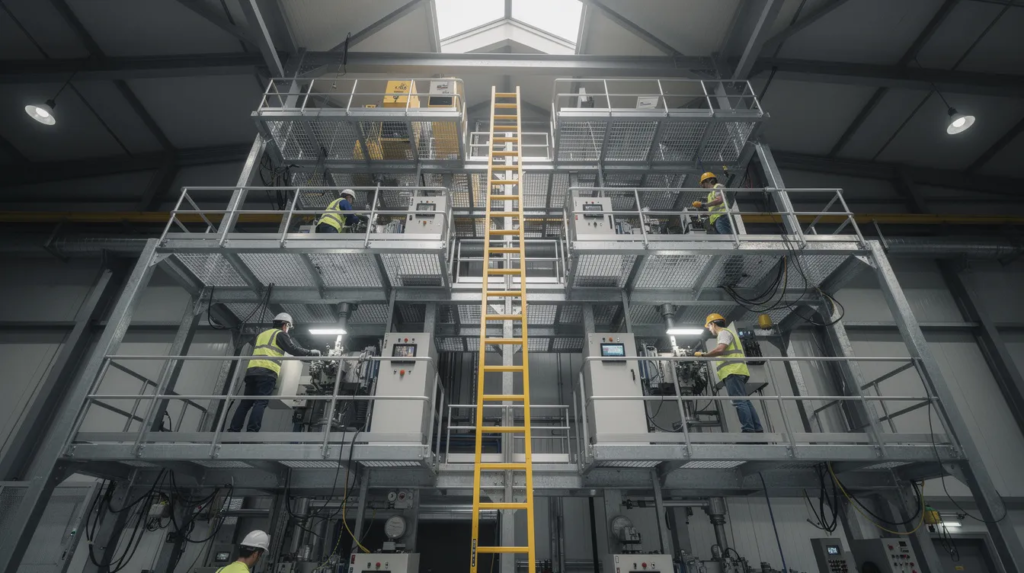
These warning signs indicate you should keep platforms separate:
One or both platforms lack compliant guardrails or have unprotected edges that would be exposed by a bridge or catwalk.
Workers only need access a few times per month, so installing a permanent connection would tempt casual use without full PPE or supervision.
Any connection would route foot traffic over dangerous equipment, open hatches, or chemical lines without a clear fall protection solution.
Structural drawings from 2015–2021 show limited load capacity, and an engineer has not approved added connecting spans.
Vendor lock-in limits flexibility if the core platform fails to adapt to evolving needs.
How Separation Supports Safer Fall Protection
Smaller, independent platforms can make fall protection requirements and inspections easier to manage. Standalone systems remain independent, operating as specialized best-of-breed tools.
Separate platforms allow tailored fall protection solutions, such as a full guardrail system on a main work platform and a personal fall arrest system on a nearby maintenance platform.
Isolated platforms reduce the chance of shortcut routes where workers bypass designated stairs or self-closing gates.
Each independent elevated platform can have its own inspection checklist under OSHA 1910.22, making defects easier to spot and fix.
Deep functionality allows tools to excel at specific tasks without dilution from serving multiple departments.
Specialized functionality is critical for tools that rely on highly unique, deep-domain features.
Standalone tools may have deeper features compared to modules within a massive platform.
Fall Protection Design: Connected vs. Separate Platforms
The decision to connect or separate directly influences fall protection strategy on walking-working surfaces. Any platform that is 4 feet or more above a lower level must have guardrails that are at least 42 inches high and capable of withstanding a force of at least 200 pounds.
Connected platforms usually rely heavily on guardrail systems (top rail, midrail, toeboards) to provide continuous fall protection along the whole route.
Separate platforms, especially smaller work platforms or access platforms, often combine guardrails with personal fall arrest systems anchored overhead.
Access openings between connected platforms (stairs, ladders, hatches) must have self-closing gates or offset entries to keep fall protection unbroken.
In some 2023–2026 retrofits, facilities replaced ladders between platforms with OSHA-compliant stair towers to improve fall protection and justify permanent connections.
Using Elevated Crossovers and Catwalks Safely
This subsection focuses on crossover bridges and catwalks that tie three platforms or more together.
Crossovers above conveyors can remove the need to step over moving lines, provided they include guardrails and toeboards on all open sides.
Catwalks between platforms must meet minimum width, load rating, and surface traction requirements, especially in wet or oily environments.
Every crossover landing and catwalk intersection should have clear marking and signage so workers stay on designated fall-protected paths.
Use carriage bolt and bolt holes configurations that match structural requirements for secure connections.
Step-By-Step Method: How to Decide Connect vs. Separate
This section gives a practical checklist any safety or maintenance manager can follow. A single, centralized view of data simplifies management of organizational information.
Step 1: Map current platforms with dates of installation (e.g., mezzanine installed 2018, crossover added 2022) and current uses. Create a simple floorplan sketch.
Step 2: Measure traffic by counting how many workers cross between platforms per shift during one representative week.
Step 3: Review OSHA requirements for each possible connection, focusing on 4-ft fall protection thresholds, guardrail needs, and access (stairs vs. ladders).
Step 4: Assess risk and rescue by asking how a fallen or injured worker on any connected platform would be reached quickly and safely.
Step 5: Consult an engineer whenever new load paths, longer spans, or welded connections are considered between existing elevated platforms.
Comparison Table: Connected vs. Separate Platforms
This table helps you match your setup to the right configuration:
Configuration | Intensity of Use | Risk Level | Best For |
|---|---|---|---|
Fully Connected Platform Network | High traffic (10+ crossings/shift) | Moderate | Production floors, continuous operations |
Partial Connections via Crossovers | Medium traffic (5-10 crossings/shift) | Moderate | Inspection routes, maintenance access |
Independent Work Platforms | Low traffic (1-4 crossings/shift) | Low to High | Hazardous areas, temporary setups, specialized tasks |
High-traffic, moderate-risk areas suit connected platforms. Low-traffic or high-hazard zones are better kept separate. Agility in technology allows easier swapping or upgrading of tools independently.
Design Tips for Safe Platform Connections in 2026
These practical design tips align with current OSHA interpretations and common industrial practice.
Design any new connected platform for realistic live loads, including tool carts, parts bins, and multiple workers (not just minimum code loads). streamlining workflows with simple tools can enhance productivity and collaboration among team members. By implementing intuitive interfaces and efficient task management solutions, teams can focus on their objectives rather than getting bogged down by complexity. This approach fosters a more agile environment where innovative ideas can flourish.
Use slip-resistant grating or coated decking on bridges between platforms, especially in 24/7 operations where spills are likely.
Standardize guardrail height, midrails, and toeboards across all connected elevated platforms to reduce confusion.
Use clear visual cues-painted edges, floor markings, and signage-to show where fall protection is present or required.
Review designs every 3–5 years or after major process changes, since added equipment and piping can alter safe routes and platform usage.
Platforms must be able to support the required weight, which varies depending on their intended use; for example, a crossover or access platform typically needs to support at least 500 pounds.
Reducing IT burden favors a single vendor, centralized support, and cohesive software governance when managing platform documentation.
Special Considerations for Mobile and Temporary Work Platforms
Mobile work platforms, portable stands, and temporary scaffolds follow different expectations than fixed platforms. These require special attention before any connection decisions.
Mobile platforms should not be hard-connected to fixed structures because movement and loading can damage both systems.
Short-term temporary platforms (for a 3-month maintenance shutdown, for example) may be better left separate with dedicated fall protection instead of integrating into permanent networks.
OSHA’s scaffold and aerial lift rules can apply to some temporary platforms, so mixing them with fixed walkways can blur which standard applies.
Use clear labeling and restricted access so workers know which elevated platforms are permanent and which are temporary or movable.
Beginners’ Guide: How New Facilities Should Plan Platform Connections
Plants built or upgraded after 2020 should design platforms with connection decisions in mind from the start.
Plan main work platform routes first-where operators will walk every shift-and then decide where crossovers or mezzanine links genuinely reduce risk.
Design stairs and landings that comply with OSHA 1910.25 from the outset, so future connections do not create bottlenecks or non-compliant angles.
Phase your approach: begin with core separate platforms, monitor traffic and incident data for 6–12 months, then only add connections where metrics justify them.
Involve operations, maintenance, and safety teams together so platform connections balance productivity with fall protection and rescue realities.
Coffin locks and secure attachment points should be specified during initial design rather than retrofitted.
FAQ: Common Questions About Connecting Work Platforms
Does OSHA require me to connect elevated platforms that are close together?
OSHA does not require platforms to be connected just because they are near each other. The standard focuses on safe access, load capacity, and fall protection for whatever configuration you choose. You can keep platforms separate if each has compliant access (stairs or ladders) and fall protection where required.
Is it safer to use a crossover bridge or to keep two mezzanines separate with stairs?
It depends on traffic patterns and hazards below. Crossovers reduce repeated stair use and stepping over equipment, but they add elevated exposure if guardrails or toeboards fail. In many factories, a guarded crossover above a conveyor is safer than workers stepping over the line on the floor, provided it meets OSHA standards.
Can I connect an old platform built before 2010 to a new one without upgrading it?
Any time you modify an elevated platform system, verify that the entire connected structure meets current OSHA walking-working surface rules and load requirements. Engage a qualified engineer to confirm capacity, guardrail strength, and connection details before tying new work platforms into older structures.
How do I handle fall protection when connecting platforms at different heights?
Transitions between different heights usually require compliant stairs, ramps, or step platforms with guardrails, rather than abrupt steps or improvised ladders. Workers may also need personal fall arrest systems if parts of the route run near unprotected edges or above dangerous equipment.
What is the difference between a work platform and a catwalk, and does it change connection decisions?
A work platform is a broader term for any elevated walking-working surface, while a catwalk is a narrow elevated walkway often used for access or inspection. Both are subject to similar OSHA platform requirements, so connection decisions still revolve around access frequency, fall protection, and structural capacity rather than the name alone.