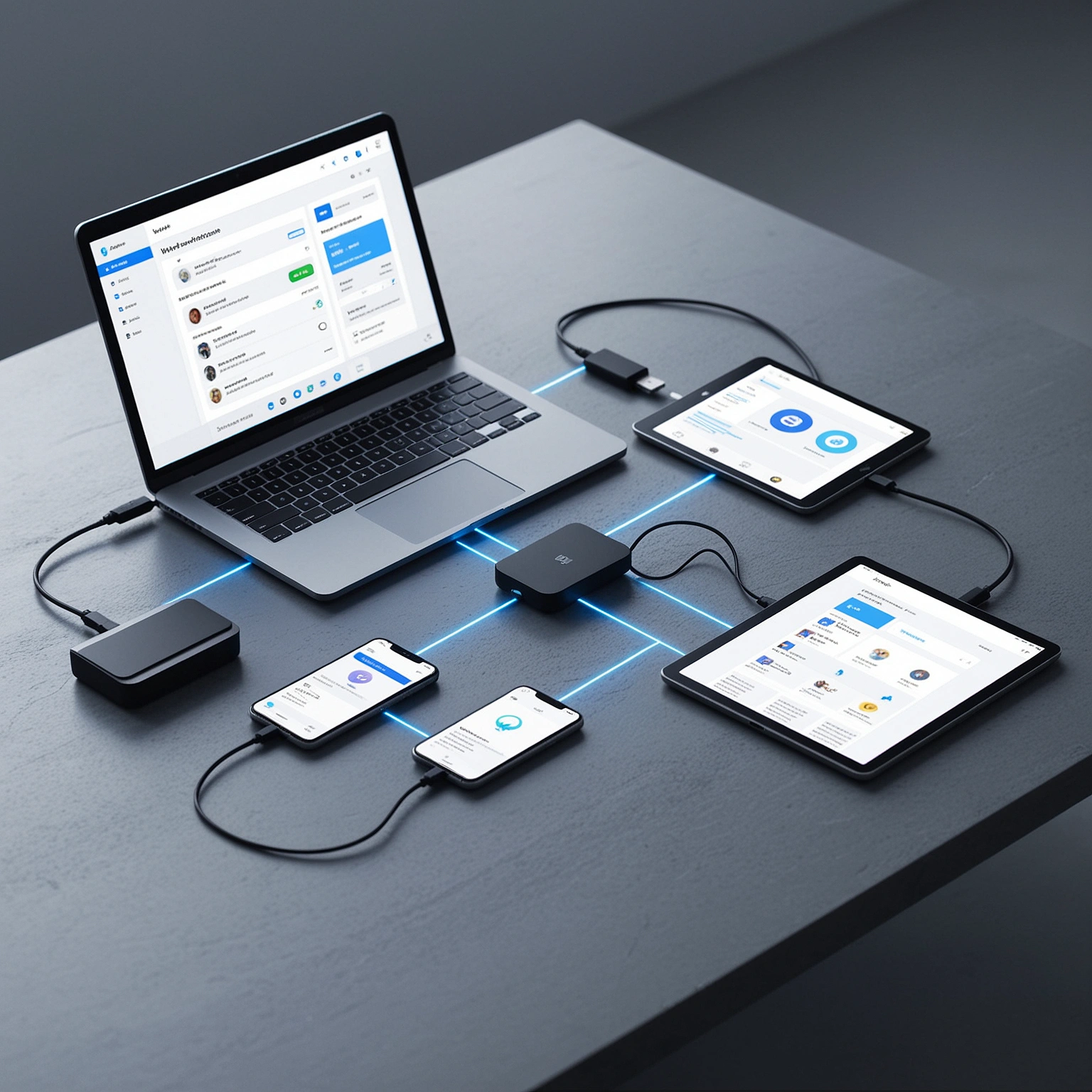
The way companies buy software has fundamentally changed. In 2026, asking “what features does this tool have?” comes second to “how does this connect to everything else we use?”
This guide breaks down why platform integrations now drive more value than isolated features-and how to make integration a core part of your product strategy. As you evaluate your approach, keep in mind platform fit considerations for startups, which can significantly influence your long-term success. By aligning your product with existing ecosystems and user needs, you can unlock new opportunities for growth and customer engagement. Moreover, a keen focus on these considerations will help ensure that your integrations resonate deeply with your target audience. In this landscape, understanding platform dependency risks for businesses becomes crucial as it affects not only your operational flexibility but also your competitive edge. Companies that fail to address these risks may find themselves locked into agreements that stifle innovation and limit scalability. Prioritizing a strategic approach to integrations will empower you to navigate these challenges effectively and drive sustainable growth.
Table of Contents
ToggleKey Takeaways
Deep platform integrations deliver more ROI than additional standalone features once your product has basic functionality covered.
Buyers in 2026 expect seamless data flow between tools-CRM, billing, support, analytics-not just strong individual capabilities.
Integrated business processes cut operational costs, reduce manual data entry errors, and improve customer experience across the entire workflow.
Data silos and broken workflows are the predictable result of treating integrations as an afterthought rather than a strategic priority.
A clear integration approach is now the foundation for digital transformation, enterprise adoption, and long-term product stickiness.
Why Integrations Now Matter More Than Standalone Features
Between 2016 and 2026, SaaS buying criteria shifted from “best feature set” to “best integrated platform.” Enterprises now report that over 80% of new digital initiatives require seamless system-to-system connectivity. Choosing digital platforms for businesses requires a careful evaluation of integration capabilities. Organizations must prioritize platforms that not only offer strong features but also facilitate smooth interaction between various systems. This shift highlights the importance of connectivity in driving successful digital transformation initiatives.
Consider how companies actually evaluate tools today:
Salesforce deals often require integration with HubSpot, Slack, and Jira
Shopify merchants look at whether data syncs automatically between their store, warehouse, and NetSuite
Buyers request proof of integration before reviewing feature checklists
Core features optimize a single step. Platform integrations connect that step across the entire system-lead to opportunity to invoice to renewal. In RFPs and security reviews, questions about APIs and integration capabilities now appear before feature comparisons.
How Integrations Eliminate Data Silos and Manual Data Entry
Data silos occur when data is scattered across different systems, creating isolated information that is challenging to access and share across the organization. Without proper integration, each new app becomes its own data silo, making it increasingly difficult to maintain data consistency and get a complete view of business operations.
Picture this scenario: your sales team uses HubSpot, finance runs QuickBooks, and operations manages fulfillment in a separate platform. Without data integration, someone spends hours weekly copying records between systems. Organizations lose approximately $12.9 million per year on average due to poor data quality tied to manual data entry.
Well-designed integrations create one continuous data flow from lead to invoice to renewal-no spreadsheet uploads required.
The benefits are concrete:
Error rates drop from ~4% to under 0.1% with automation
Customer records stay consistent across multiple systems
Reporting cycles shrink from days to hours
Integrated data also becomes the backbone for analytics, AI assistants, and automation that depend on accurate cross-system context.
Why Platform Integrations Drive Better Customer Experiences
In 2026, customers expect real-time updates-shipping notifications, instant subscription changes, support teams who know their full history. Unified data across CRM, help desk, and product usage tools makes this possible.
When systems share data, support reps see purchase history, billing status, and prior tickets in one view. Marketing automation uses integrated data-purchases, support tickets, product activity-to personalize campaigns without guesswork.
Disconnected systems create the opposite:
Wrong invoices reaching customers
Missing orders in fulfillment
Support asking questions the customer already answered
These inconsistencies directly damage customer experience. Enterprise buyers now ask early in sales cycles how your integrations will support their end-to-end customer journey. Customer facing systems that don’t talk to each other signal a product that will create friction, not solve it.
Cost Savings and Efficiency Gains From Integrated Business Processes
Integration delivers measurable cost savings-not just technical elegance. Integrating multiple systems can reduce the time employees spend switching between applications, which can be as much as 60 minutes per day, thereby increasing productivity.
Companies with strong API and integration capabilities can save 25% of service time compared to competitors, enhancing operational efficiency.
Here are the specific cost levers:
Cost Category | Without Integration | With Integration |
|---|---|---|
Manual data entry | 30-60 min/day | Near zero |
Error correction | 4% error rate | Under 0.1% |
Tool overlap | Multiple redundant licenses | Consolidated stack |
Custom connectors | One-off fragile builds | Reusable patterns |
Using a single integration platform can significantly reduce the time spent on manual data entry, as it automates data flow between systems, allowing for real-time updates and reducing the risk of errors. A single integration platform can streamline workflows by eliminating the need for employees to switch between multiple applications, thus enhancing overall productivity and efficiency.
Standardized enterprise integration patterns reduce long-term maintenance versus a web of fragile one-off connections. Better data flow enables automation-billing, notifications, approvals-that delivers increased efficiency across finance, sales, and operations.
Integrations as the Engine of Digital Transformation
Digital transformation is less about buying new tools and more about connecting existing ones. Enterprise integration links legacy systems-ERP, on-prem databases, EDI-with modern SaaS apps and APIs.
Many firms need to connect ERPs from the 2000s with 2026 cloud platforms. A unified hybrid architecture is increasingly expected. This is where integration platforms bridge the gap between old and new.
Integrated data enables advanced use cases:
Real-time inventory visibility across channels
AI forecasting using support, billing, and usage data together
Automated renewal and subscription workflows
Without integrations, “digital transformation” programs stall. New tools still rely on outdated, manual processes. Complex processes remain complex when different software can’t share data automatically.
How to Prioritize Integrations vs. Individual Core Features
Product teams constantly face tradeoffs between shipping another feature and building integrations. Here’s how to decide:
Integrations that unlock entire business processes-quote-to-cash, order-to-fulfillment-should often come before incremental UX polish. Group your product roadmap items by themes (growth, retention, efficiency) and rank integrations alongside other features within those themes.
Quantify the impact:
A feature that saves 2 minutes per user per week
An integration that eliminates a 30-minute manual task entirely
The integration often wins. It also increases the value of existing core features by extending them into more of the customer’s daily operations.
Choosing the Right Integration Approach for Your Product
“Integration” covers several approaches: native integrations, public APIs, embedded iPaaS, and custom connectors. Each serves different purposes.
Approach | Best For | Complexity |
|---|---|---|
Native integrations | Top 5-10 systems your customers use | High investment, high quality |
Public APIs | Developer flexibility, long-tail tools | Medium investment |
Embedded iPaaS | Breadth of connectors | Lower investment per connector |
Custom connectors | Enterprise-specific needs | Variable |
Align your integration approach with your ideal customer profile. SMBs need plug-and-play setups. Enterprises insist on robust APIs, SSO, and compliance documentation.
Support both real-time and batch data flows depending on use case-instant customer updates versus nightly financial syncs. A clear, documented integration strategy prevents ad hoc decisions that create technical debt. Cloud-based integration platforms offer scalability, flexibility, and cost-efficiency for businesses adapting to changing needs.
Designing Integrations That Scale With Customers
One-off, hard-coded integrations become unmanageable as your customer base grows. Integration platforms allow businesses to scale their software ecosystem as needs grow, enabling the addition of new platforms without overhauling the entire system.
Build with reusable patterns:
Shared authentication modules
Standardized webhooks
Configurable field mappings
Multi-tenant design (one integration supports hundreds of customers via configuration)
Versioning and backward compatibility matter. Customers need to adopt new integration capabilities without downtime or forced migrations.
Observability is core to scalability: logs, dashboards, and alerts help non-engineers understand data flow health. Companies with strong API and integration capabilities can save 25% of service time compared to competitors, highlighting the importance of effective integration for scalability.
How Integrated Data Supercharges Analytics and AI
AI and analytics in 2026 depend more on data integration than on any specific model choice. Integrating multiple platforms allows organizations to gain deeper insights by pulling data from different sources, leading to a more holistic view of performance and better decision-making.
Consider churn prediction. An AI system predicts more accurately when it sees support tickets, usage drops, and invoice disputes in one unified dataset-not fragmented across disconnected systems.
Access to real-time data through integration enables teams to measure KPIs and goals more efficiently, ensuring that decisions are based on the most current information available. Effective integration allows for real-time data updates, ensuring that decision-makers have access to the most current information, which is crucial for timely and informed decision-making.
Fragmented data silos lead to misleading dashboards, incomplete metrics, and low trust in analytics outputs. Organizations that utilize a single integration platform can achieve a unified source of truth, ensuring that all data is consistent and accessible from one location, which simplifies reporting and decision-making.
Practical Steps to Make Integrations a First-Class Product Capability
Treat integrations as strategic product features, not backlog afterthoughts.
Concrete steps:
Create a visible integrations page or marketplace where customers discover and configure connections
Embed integration planning into product discovery-every major feature should consider what systems it connects to
Provide documentation, sandbox environments, and sample workflows
Train sales and customer success to treat integrations as key value drivers in demos and onboarding
Marketing, sales, and CS alignment matters. When everyone emphasizes integration benefits, customers understand the full value of your platform.
Common Pitfalls When Relying Only on Individual Features
Shipping many isolated features without a unifying integration strategy creates predictable problems.
Warning signs:
Users exporting CSVs daily
Teams maintaining shadow spreadsheets
Leadership lacking a single source of truth
Rising support tickets about data mismatches
Lost enterprise deals that demand interoperability
Inconsistent or incomplete integrations can lead to data silos, where information remains locked in one system and is inaccessible to others, reducing efficiency and creating compliance risks.
Over time, lack of integration makes even feature-rich products feel slow and fragmented. Audit your product and customer base for these signs-then prioritize integration fixes accordingly.

FAQ: Platform Integrations vs. Individual Features
Are integrations always more important than core features?
Basic core features must meet a minimum bar first. But once product-market fit emerges, integrations often create more marginal value than another niche feature. In mature markets, integrations can be the deciding factor between otherwise similar feature sets. Focus first on solving the main job-to-be-done, then shift to integrations that connect that job into the broader business process.
How do I measure the ROI of a new integration?
Track reductions in manual data entry time, lower error rates, fewer support tickets, and faster onboarding. Tie integrations to revenue metrics like win rates in deals that requested that integration and improved retention for accounts that adopt it. Customer interviews and case studies quantify softer benefits like better customer experiences and smarter decisions.
What if my customers all use different tools-how can I prioritize integrations?
Group tools by category (CRM, billing, support) and start with the top one or two systems in each based on customer count and deal impact. Offering strong APIs and using an embedded iPaaS or connector framework covers long-tail tools without many custom builds. Revisit your integration roadmap quarterly as usage patterns evolve.
Can small businesses benefit from platform integrations?
Small teams often see the fastest gains because they have limited headcount to waste on manual data entry and app switching. Connecting accounting, ecommerce, and shipping tools reduces admin work dramatically in companies with under 20 employees. Modern cloud services in 2026 often include built-in integrations or marketplaces accessible without large IT budgets.
What is the first integration I should build for a new SaaS product?
Start with the system that sits directly before or after your product in the customer’s main workflow-often CRM, billing, or a core operations platform. Target eliminating the most painful manual data export step users currently perform. Use this initial integration as a template for how you design, document, and support all future integrations.